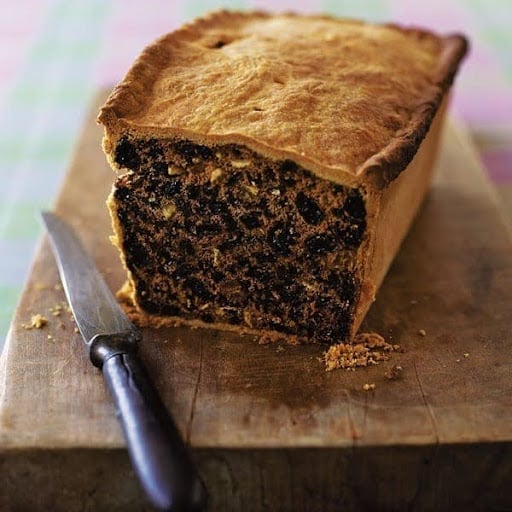
Traditional Scottish Black Bun
A Brief History of Black Bun
Black Bun’s origins trace back to the days when Twelfth Night (January 5th) was a widely celebrated holiday, filled with merriment and revelry. During this festival, a dense, fruit-laden cake was served to symbolize prosperity for the coming year. As Twelfth Night celebrations waned in popularity during the Reformation, the cake found a new home at Hogmanay. For centuries, Black Bun has been exchanged as a gift, meant to symbolize bringing good fortune and warding off dark spirits as the New Year begins.
Ingredients
For the Pastry
- Flour: 1 ½ cups (200g)
- Salt: ½ tsp
- Butter (cold, diced): ⅓ cup (80g)
- Lard (cold, diced): ⅓ cup (80g) or substitute with more butter if preferred
- Cold Water: About ¼ cup (60ml)
For the Filling
- Currants: 1 ½ cups (225g)
- Sultanas (golden raisins): 1 ½ cups (225g)
- Chopped Prunes: 1 cup (150g)
- Brown Sugar: ½ cup (100g)
- Plain Flour: ½ cup (60g)
- Breadcrumbs: ½ cup (50g)
- Blanched Almonds, roughly chopped: ½ cup (50g)
- Mixed Spice: 1 tbsp (contains cinnamon, nutmeg, allspice, cloves)
- Ground Ginger: 1 tsp
- Black Pepper: ½ tsp
- Baking Powder: ½ tsp
- Eggs: 2, lightly beaten
- Whisky or Brandy: ¼ cup (60ml)
For the Egg Wash
- Egg: 1, lightly beaten with a splash of milk
Directions
- Make the Pastry
- Sift the flour and salt into a mixing bowl. Add the butter and lard, and rub them into the flour with your fingers until the mixture resembles breadcrumbs.
- Add the cold water gradually, mixing until the dough just comes together. Turn it out onto a lightly floured surface, form it into a ball, wrap it in cling film, and let it chill in the fridge for about 30 minutes.
- Prepare the Filling
- In a large bowl, combine the currants, sultanas, brown sugar, flour, breadcrumbs, and almonds.
- Stir in the mixed spice, ginger, black pepper, and baking powder. Pour in the whisky or brandy and the beaten eggs. Mix until everything is thoroughly combined and the fruit is evenly coated. Set aside to rest for about 30 minutes.
- Assemble the Black Bun
- Preheat the oven to 325°F (160°C) and grease a 9×5-inch loaf pan (or a similar deep baking dish).
- Roll out two-thirds of the pastry on a floured surface to line the bottom and sides of the pan, leaving a little overhang on the edges. Press the pastry into the pan carefully, ensuring it fits snugly.
- Fill the pastry case with the fruit mixture, pressing down firmly to compact it.
- Roll out the remaining pastry to form a lid. Place it over the filling and fold the overhanging edges over the lid, pressing to seal. Prick a few holes in the top to let steam escape.
- Bake the Black Bun
- Brush the top with the beaten egg wash and place in the preheated oven.
- Bake for 2 to 2 ½ hours, or until the pastry is golden brown and the filling is firm when pressed gently. If the pastry browns too quickly, cover it loosely with foil.
- Let It Cool
- Allow the Black Bun to cool completely in the tin. Once cooled, remove it from the pan and wrap it tightly in baking paper and foil. Traditionally, it is left to mature for a few days to allow the flavors to meld together fully.
Black Bun is often sliced into thin wedges and enjoyed with a dram of whisky or a strong cup of tea. Its dense, spiced flavor is perfect for cold winter nights and special occasions. It keeps very well. Wrapped and stored in an airtight container, it can last several weeks—perfect for nibbling as the New Year begins!
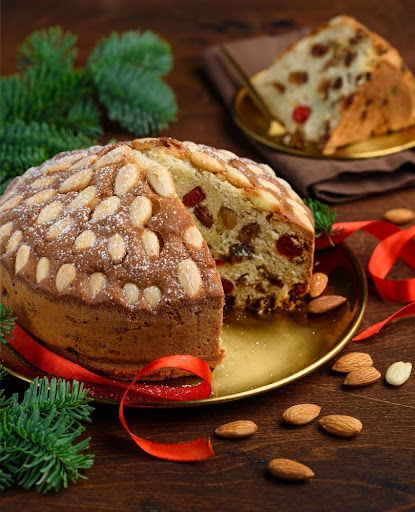
Dundee Cake Recipe
Brief History
The Dundee Cake has a rich history intertwined with both legend and fact, making it one of Scotland’s most beloved traditional treats. Its origins trace back to the Keiller family in Dundee, who are widely credited with popularizing the cake in the 19th century. The Keillers were also famous for creating Dundee marmalade, a deliciously bittersweet orange marmalade that became a key ingredient in the cake.
Legend has it that Mary, Queen of Scots, had a particular fondness for a version of fruit cake that excluded glace cherries, which she disliked. Instead, she preferred a cake studded with dried fruits and topped with almonds, creating a version similar to what we know today as Dundee Cake. While it’s uncertain if the exact recipe dates back to her time, this preference supposedly influenced the modern cake’s composition.
The Keillers’ contribution to the Dundee Cake’s fame also includes their technique of arranging blanched almonds in neat concentric circles on top of the cake—a trademark that distinguishes it from other British fruit cakes. This decorative touch, combined with the cake’s crumbly texture and balanced sweetness, helped establish Dundee Cake as a popular festive dessert.
Another fascinating tidbit: Dundee Cake was once served to British soldiers during World War I and World War II, who appreciated its long shelf life and rich flavor. It could withstand long journeys without spoiling, making it a hearty and comforting treat for those far from home.
Today, Dundee Cake remains a Scottish icon, especially during the Christmas season, celebrated for its traditional flavors and unique historical roots.
Ingredients
- 1 cup (225 g) unsalted butter, softened
- 1 cup (200 g) caster sugar
- 4 large eggs
- 2 cups (250 g) all-purpose flour
- 1/2 cup (50 g) ground almonds
- 1 tsp baking powder
- 1/4 tsp salt
- 1 1/2 cups (225 g) mixed dried fruits (currants, sultanas, golden raisins)
- 1/3 cup (60 g) candied orange peel, chopped
- 1/4 cup (60 ml) orange marmalade
- 1 tbsp orange zest
- 2 tbsp Scotch whisky (optional but traditional)
- Blanched almonds for topping
Directions
- Preparation: Preheat oven to 300°F (150°C). Grease and line an 8-inch (20 cm) round cake tin with parchment paper.
- Cream Butter and Sugar: In a large bowl, cream butter and sugar until pale and fluffy. Beat in the eggs one at a time, adding a spoonful of flour if it starts to curdle.
- Combine Dry Ingredients: In a separate bowl, mix flour, ground almonds, baking powder, and salt.
- Incorporate Fruits and Zest: Add dried fruits, candied peel, orange marmalade, and orange zest to the butter mixture. Fold in the flour mixture, adding whisky if using.
- Pour and Decorate: Pour batter into the prepared tin, smooth the surface, and arrange blanched almonds in circles on top.
- Bake: Bake for 2 to 2 1/2 hours. If the top browns too quickly, cover it loosely with foil.
- Cool and Serve: Let the cake cool, then transfer to a rack. Wrap tightly if storing, as Dundee Cake often improves with age.
Enjoy this Scottish classic with a cup of tea, coffee, or even a wee dram of whisky!