Authentic Hand-Crafted Bavarian Laugenbrezeln
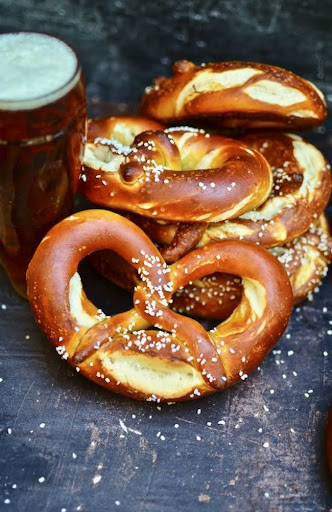
Bavarian pretzels, or Laugenbrezeln, are a beloved staple of German baking, particularly in Bavaria. Characterized by their deep golden, glossy crust, soft, chewy interior, and distinctive flavor, these pretzels are made using a lye bath, which gives them their signature texture and taste.
Traditionally, pretzels are enjoyed with butter (Butterbrezen) or alongside classic Bavarian dishes like Weißwurst (Bavarian sausage) and Obatzda (cheese spread). The origins of the pretzel date back over a thousand years, with some legends claiming that an Italian monk first created them to resemble crossed arms in prayer. The use of lye, however, is believed to have originated in 19th-century Munich when a baker accidentally dropped a batch of pretzels into a lye solution used for cleaning. The result? The now-iconic Bavarian Laugenbrezel.
Ingredients
Dough:
- 4 cups (500g) bread flour (high-protein for a chewier texture)
- 1 ½ tsp (9g) salt
- 2 tbsp (30g) unsalted butter, softened
- 1 ½ tsp (6g) sugar
- 1 packet (7g or 2 ¼ tsp) active dry yeast
- 1 ¼ cups (300ml) warm water (about 110°F/43°C)
Lye Bath (Alkaline Solution):
- 4 cups (1L) water
- 1 oz (30g) food-grade sodium hydroxide (lye)* OR ¼ cup (60g) baking soda as a substitute
CAUTION: Handle food-grade lye with caution. Always wear gloves and eye protection, and add lye to water (never the reverse) to avoid splashes.
Topping:
- Coarse pretzel salt (or flaky sea salt)
Step-by-Step Instructions
- Prepare the Dough
- In a small bowl, combine warm water and sugar. Sprinkle yeast on top, let sit for 5–10 minutes until frothy.
- In a large mixing bowl (or stand mixer with a dough hook), combine flour and salt. Add softened butter.
- Pour in the activated yeast mixture and knead for 8–10 minutes (medium speed if using a mixer) until smooth and elastic. The dough should be soft but not sticky.
- Shape into a ball, place in a lightly greased bowl, cover, and let rise in a warm place for 60 minutes or until doubled in size.
- Shape the Pretzels
- Preheat oven to 450°F (230°C). Line a baking sheet with parchment paper.
- Punch down the risen dough and divide into 8 equal pieces (about 100g each).
- Roll each piece into a 20-inch (50cm) rope, slightly thicker in the middle.
- Shape into a traditional pretzel:
◦ Form a U-shape.
◦ Cross the ends over each other twice.
◦ Fold them down onto the base of the U. Press lightly to seal.
- Place the shaped pretzels onto a tray lined with parchment paper and refrigerate for 30 minutes to help them hold their shape.
- Prepare the Lye Bath
CAUTION: Use gloves and protective eyewear when handling lye.
- In a well-ventilated area, add 1 oz (30g) food-grade lye to 4 cups (1L) cold water in a glass or stainless steel bowl (never aluminum). Stir gently with a wooden spoon until dissolved.
◦ Baking soda alternative: Boil 4 cups (1L) water and dissolve ¼ cup (60g) baking soda. Let cool slightly before using.
- Using a slotted spoon, dip each pretzel into the solution for 10–15 seconds.
- Remove and place on the lined baking sheet.
- Bake the Pretzels
- Sprinkle pretzels with coarse salt.
- Bake at 450°F (230°C) for 12–15 minutes, until deep brown and glossy.
- Transfer to a wire rack and let cool for at least 10 minutes before eating.
- Enjoy!
Serve warm with Bavarian mustard, butter, or Obatzda. Best enjoyed with a stein of Bavarian beer.
“Des hod da Himmi bschehrt!” (Bavarian dialect for: “Heaven has bestowed this upon you!”)
Enjoy your homemade Laugenbrezeln!
Authentic Bavarian Style Obatzda
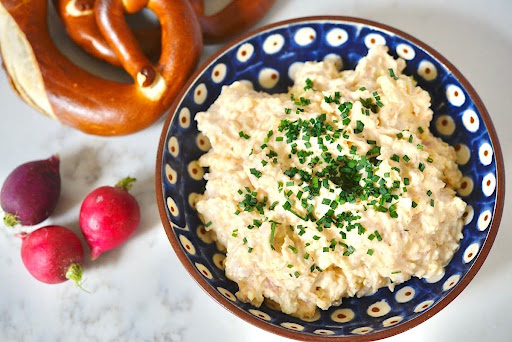
Obatzda (sometimes spelled Obazda) is a traditional Bavarian cheese spread that is rich, creamy, and packed with flavor. It is commonly served in beer gardens (Biergärten) alongside fresh-baked pretzels (Laugenbrezeln), radishes, and a cold Bavarian beer.
The dish was originally created as a way to use up leftover Camembert or Brie, which were mixed with butter and seasonings to make a delicious and spreadable snack. Today, it remains a staple of Bavarian cuisine, often enjoyed during Oktoberfest or as part of a hearty Bavarian breakfast.
Obatzda is best enjoyed fresh at room temperature, paired with a cold Weißbier (wheat beer) or Helles (pale lager). It is a staple in Bavarian beer gardens, often served on a wooden platter with radishes and pretzels.
A staple of Bavarian cuisine, it is often enjoyed during Oktoberfest or as part of a hearty Bavarian breakfast.
Ingredients (Serves 4-6)
- 7 oz (200g) ripe Camembert, Limburger, or Romadur (or Brie, at room temperature)
- 3.5 oz (100g) cream cheese or Quark (soft fresh cheese)*
- 2 tbsp (30g) unsalted butter, softened
- 1 small onion, finely chopped
- 1 tsp sweet paprika (plus extra for garnish)
- ½ tsp caraway seeds, lightly crushed (optional, but traditional)
- Salt and freshly ground black pepper, to taste
- 1-2 tbsp (15-30ml) dark beer (or milk, for a milder taste)
- Chives, finely chopped (for garnish)
Optional Additions:
- ½ tsp hot paprika (for a spicier kick)
- 1 tsp Dijon or Bavarian sweet mustard
- 1 garlic clove, minced
* Quark can be simulated by using Greek yogurt and draining it, adding a little sour cream and sweet cream.
Step-by-Step Instructions
- Mash the Cheese
- Cut the Camembert into small pieces and place in a mixing bowl.
- Add the butter and cream cheese/Quark.
- Using a fork or potato masher, mash everything together until smooth but still slightly chunky (some small cheese pieces are traditional).
- Mix the Seasonings
- Stir in onion, paprika, caraway seeds, salt, and pepper.
- Gradually add dark beer (or milk), stirring until the mixture is creamy and spreadable.
- Garnish and Serve
- Transfer the Obatzda to a serving dish.
- Sprinkle with extra paprika and chopped chives.
- Serve with fresh pretzels, rye bread, radishes, or pickles.
“A guada Obatzda und a frische Brezen – des is a Stückerl Bayern!”
(“A good Obatzda and a fresh pretzel – that’s a little piece of Bavaria!”)
Enjoy your homemade Obatzda!